The shelf turned into a gallery, and almost nobody noticed
A 16-ounce can gives an artist about 8 inches by 5 — roughly the surface of a paperback cover — and unlike a paperback, it has to work from six feet away, in a cooler, behind glass, against forty competitors. It is one of the hardest and most public briefs in commercial art. And there is more of it than nearly any other illustration market in the country: about 103 new beer labels go on file in a typical week. Not designs sketched, not concepts pitched — finished labels, registered and headed for shelves.
That volume is a recent phenomenon. Through the 1990s, most beer labels came in two flavors: heritage (crests, ovals, gold rules, the word “premium”) and clip art. The label's job was to say beer, trustworthy, cold. Then craft brewing multiplied the number of breweries in America by a factor of ten, every one of them fighting for the same four inches of shelf, and the label's job changed: now it had to say this one, specifically, is different.
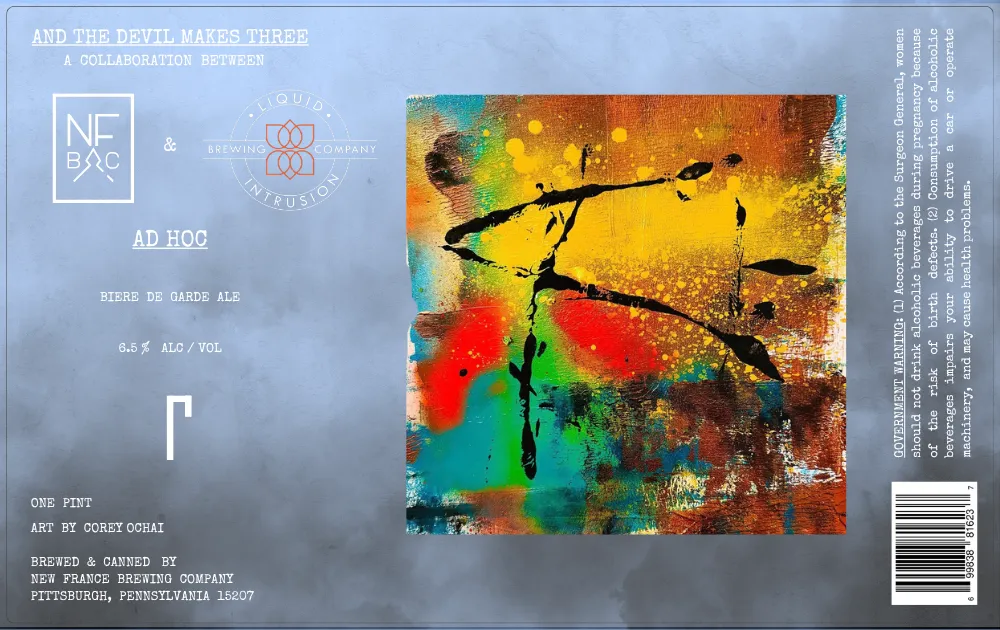 Ad HocNEW FRANCE BREWING COMPANY · art: Corey Ochai
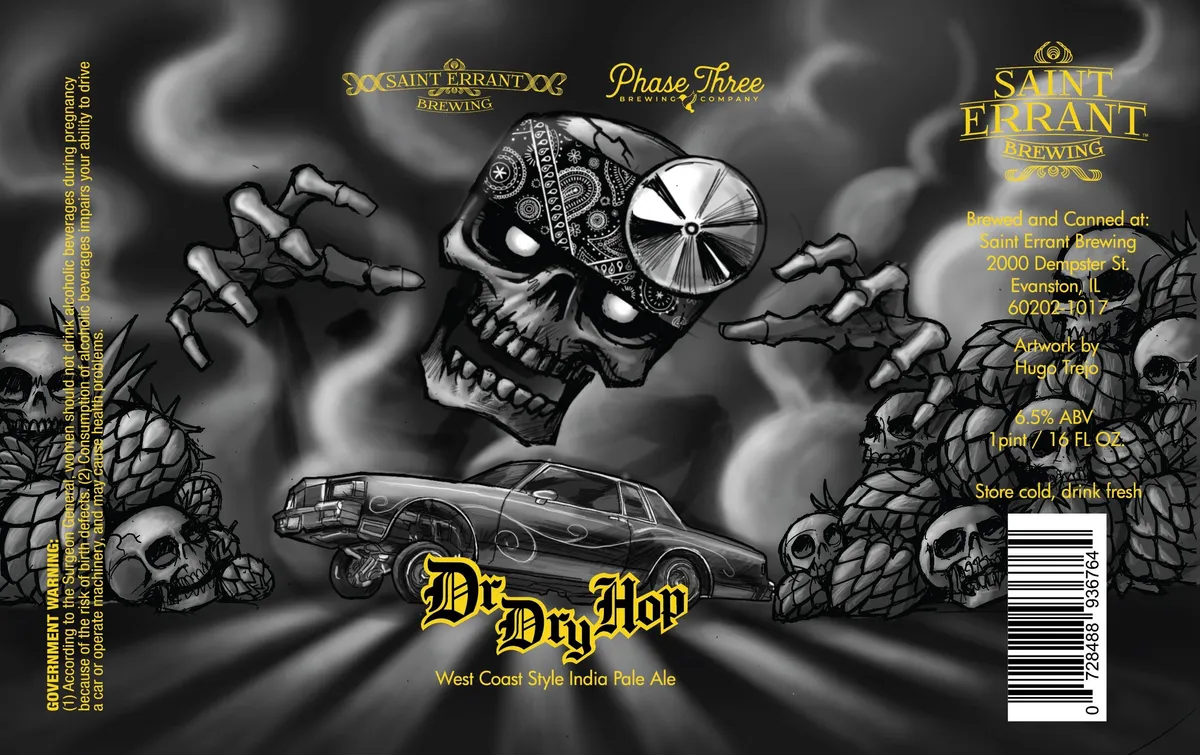 Dr. Dry HopSAINT ERRANT BREWING · art: Hugo Trejo
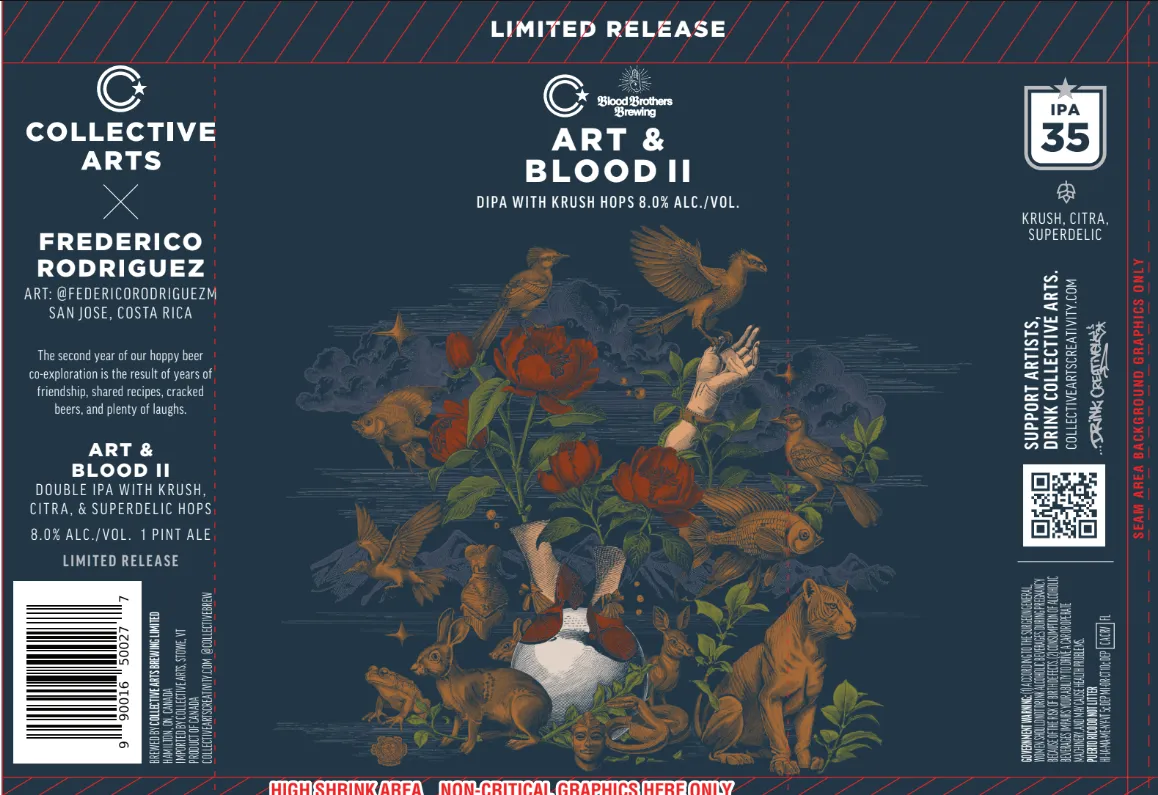 Art & Blood IICOLLECTIVE ARTS · art: Federico Rodriguez
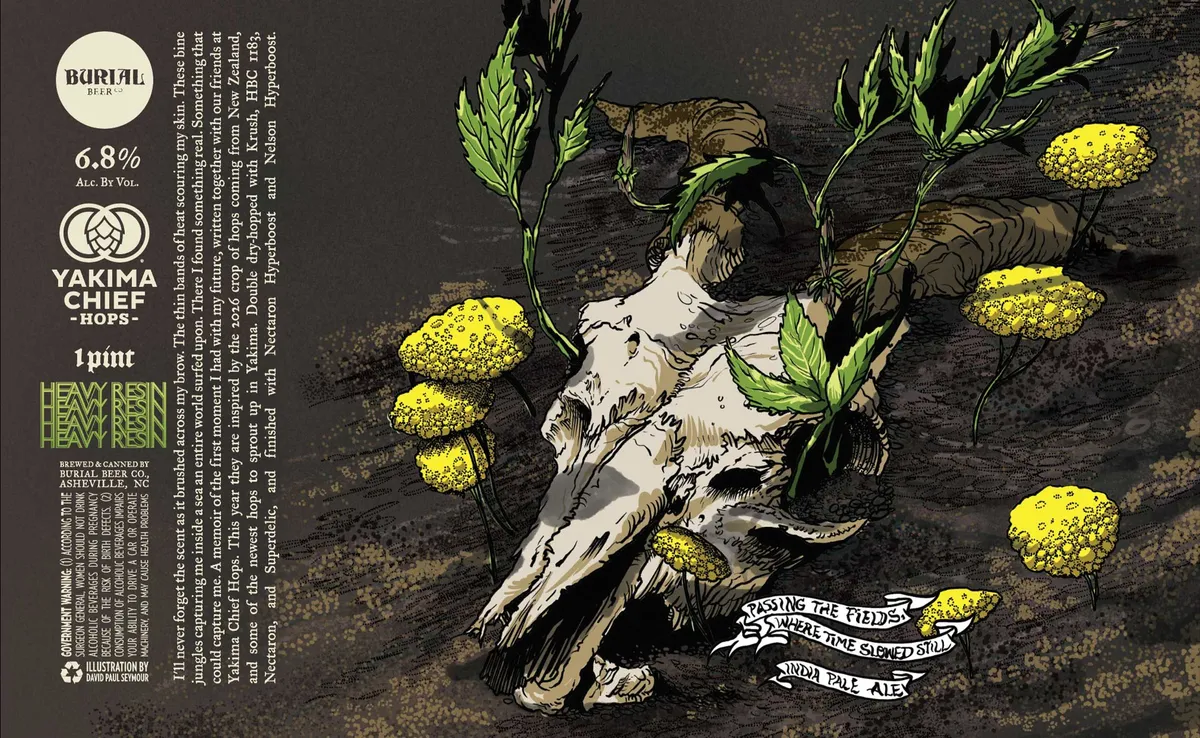 Passing The Fields, Where Time Slowed StillBURIAL BEER CO. · art: David Paul Seymour
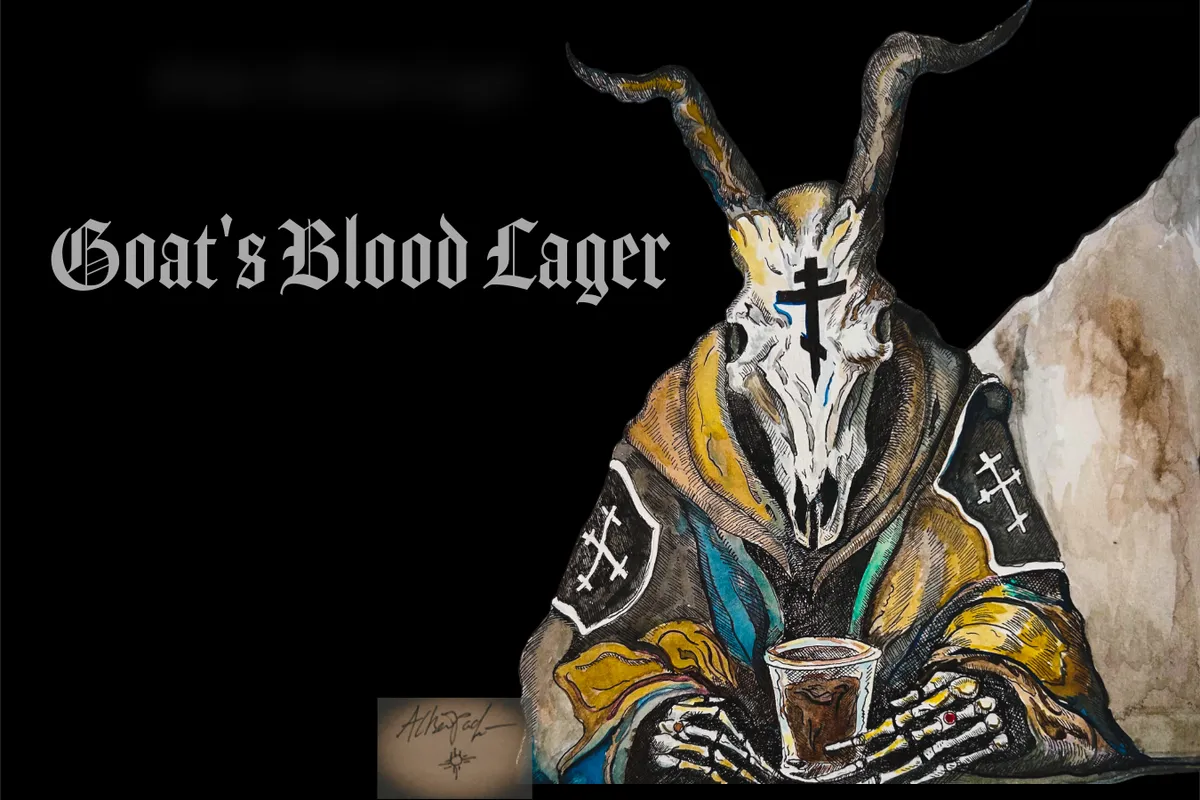 Goat's Blood LagerOLD SHEEPDOG BREWERY · art: Alastor
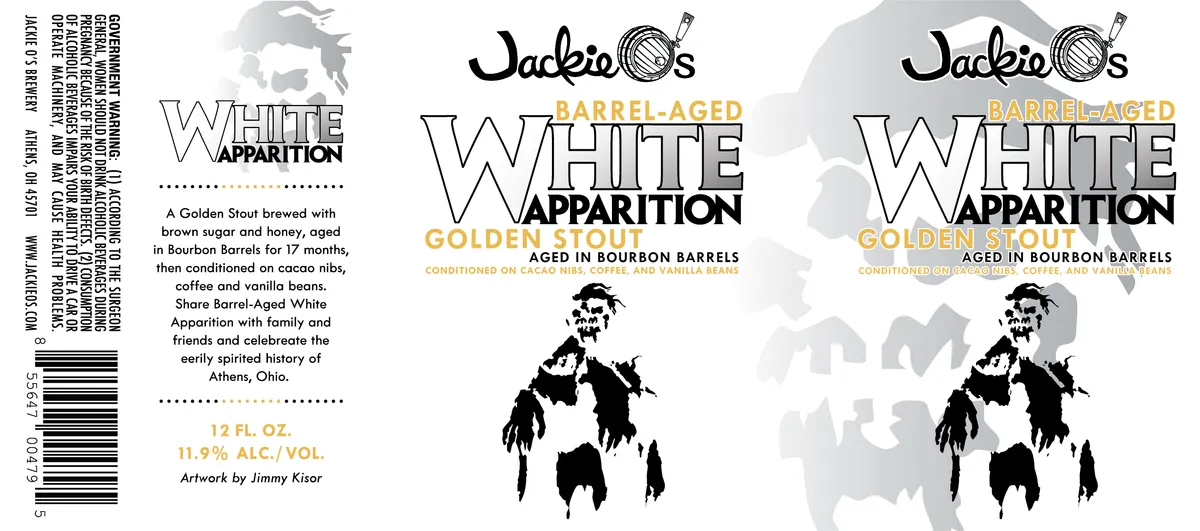 Barrel-Aged White ApparitionJACKIE O'S · art: Jimmy Kisor
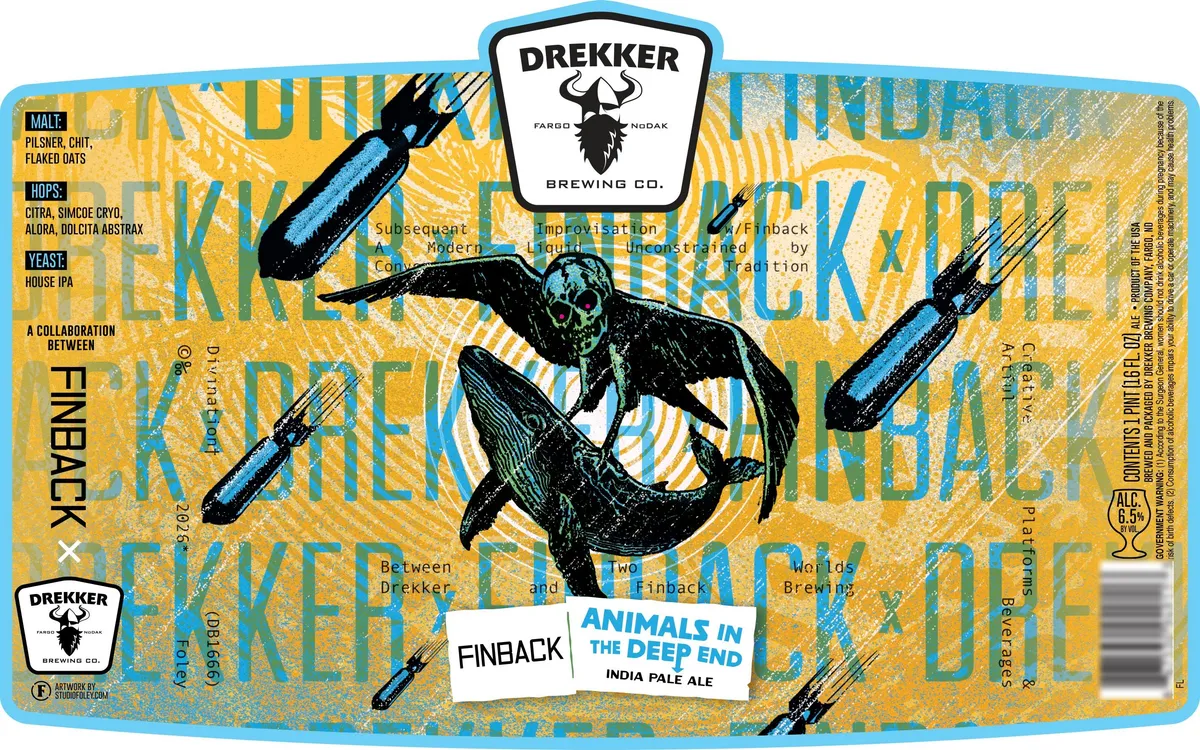 Animals In The Deep EndDREKKER BREWING COMPANY · art: STUDIOBHELEY.COM
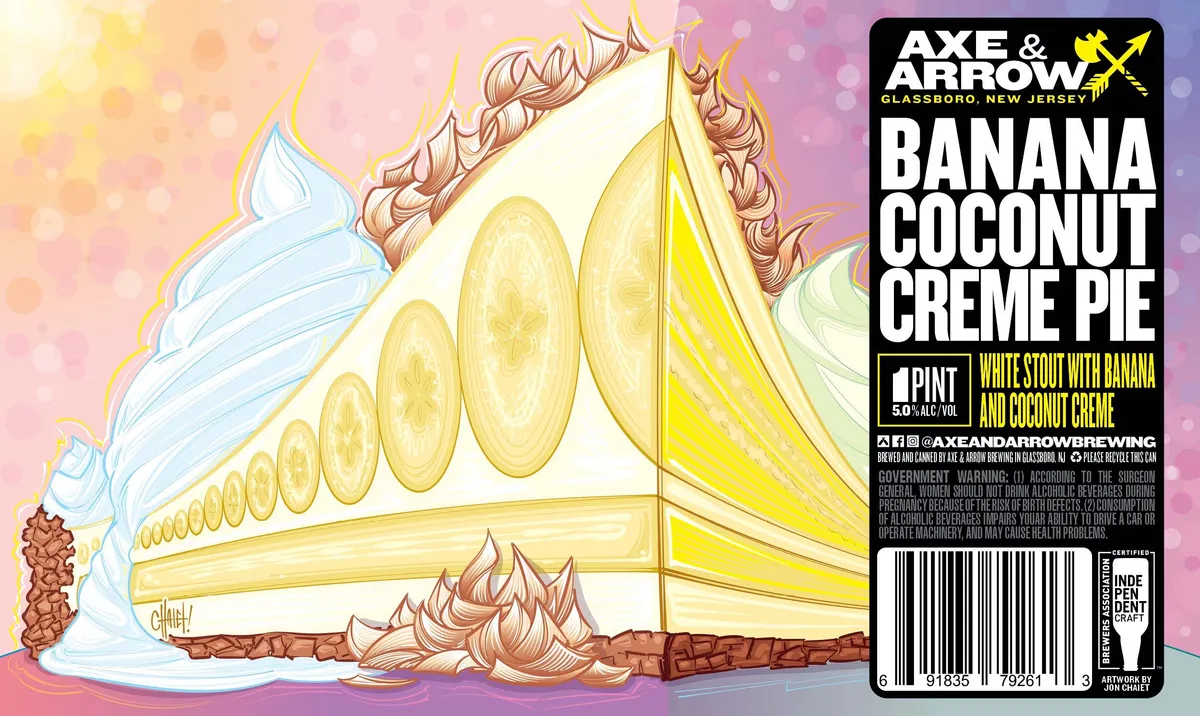 Banana Coconut Creme PieAXE & ARROW BREWING · art: Jon Chaiet
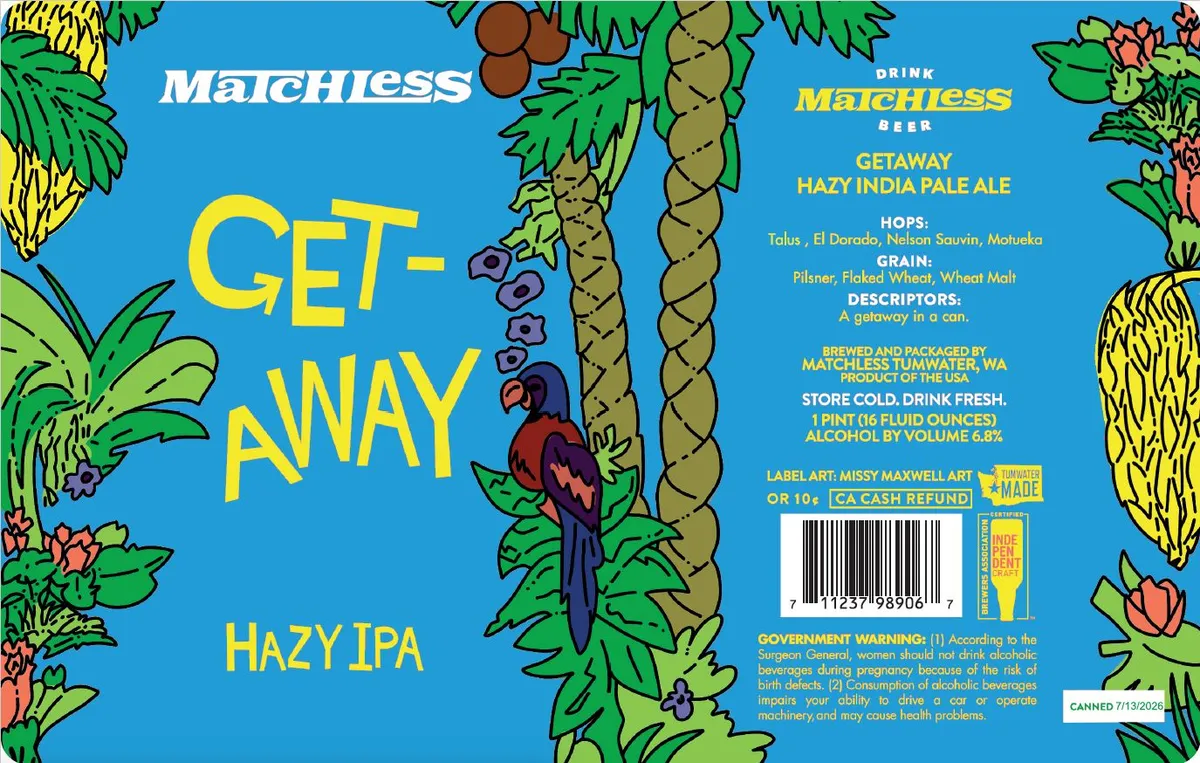 GetawayMATCHLESS · art: Missy Maxwell Art
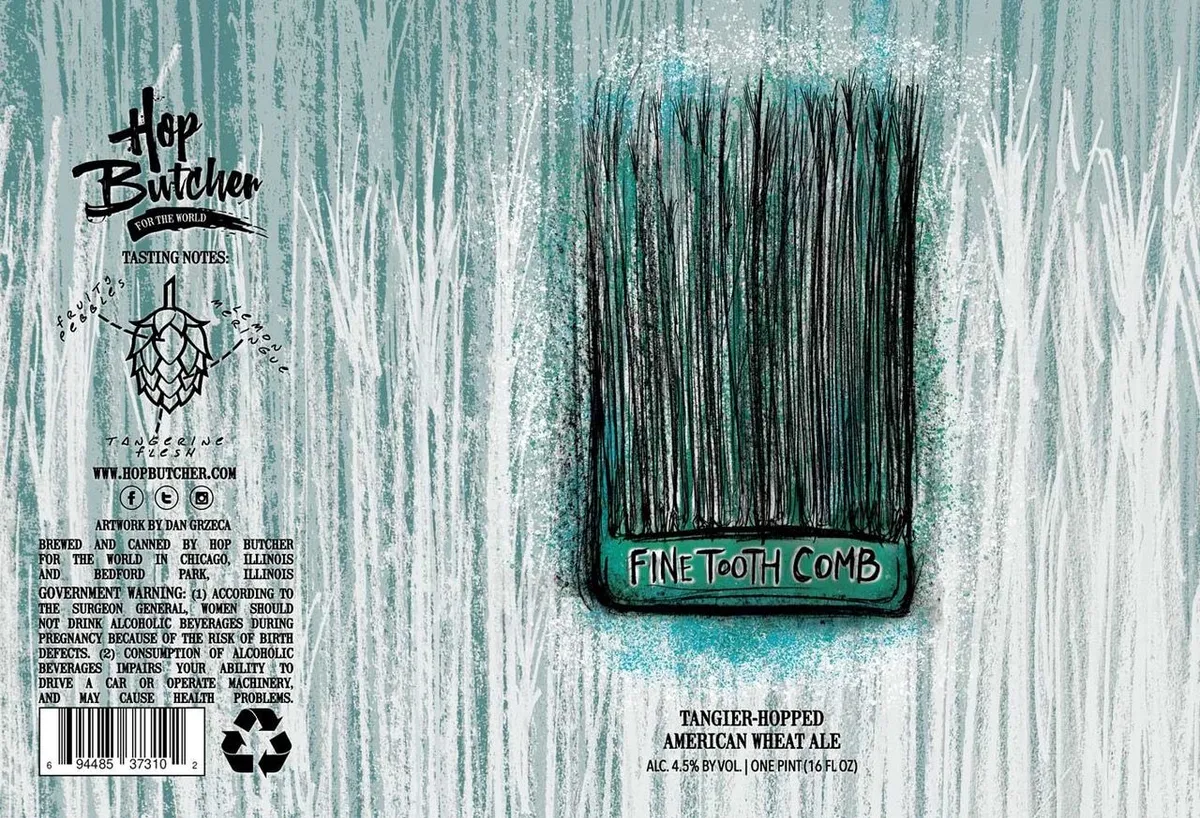 Fine Tooth CombHOP BUTCHER FOR THE WORLD · art: Dan Grzeca
From packaging to portfolio
The turn is easy to date if you watch the record. First came the era of the in-house logo-with-a-color-band — one identity, many beers. Then hazy IPAs and small-batch releases blew up the model: when a brewery ships thirty different beers a year and each one gets photographed for Instagram before it gets tasted, every release needs its own artwork. Breweries stopped ordering packaging and started commissioning pieces.
You can see who they called. Gig-poster artists, tattooers, comic illustrators, printmakers — people whose work already lived at poster scale and read at a distance. On the labels moving through the register right now we find the hand of gig-poster veterans with decades of rock-show flats behind them, metal-scene illustrators whose linework belongs on album covers, muralists, and studios that exist entirely to draw beer. Some breweries settled into long partnerships where the artist is the brand — the can style so recognizable you clock it across the store before you can read a word.
The proof this became a real art economy: the credit line. Labels increasingly carry “art by” the way book jackets carry a designer's name — a small act of respect that would have been unthinkable on a 1995 six-pack.
The largest rolling exhibition in the country
Here is the part almost nobody knows: every one of these pieces passes through a public record. Before a beer can cross state lines, its label is registered — the full artwork, exactly as it will print. Which means the label-approval record is, in effect, the largest continuously updated exhibition of working commercial art in America. Nobody hangs it. It just accumulates, hundreds of pieces a week, seen by approximately no one.
That is why we built the Gallery — the art-forward cut of everything on file, updated daily — and why we read the fine print for credits. So far the record has named 69 artists on labels we've read, and each has a page in the artist directory collecting their labels in one place. The most-credited artist in our corpus right now has more than twenty labels on file — a body of work bigger than many gallery shows, produced for the cooler aisle.
The credit gap
But 69 named artists against 12,579 labels tells you the other half of the story: most label art ships anonymous. The artist's name lives in an invoice and nowhere else. In any other illustration market that would be a scandal; in beer it's just habit.
So consider this an open letter in both directions. Breweries: put the credit on the can — it costs six points of type and buys you an artist who promotes your beer to their audience for free. Artists: if your work is on a can, it's in the public record, and it may already be in our directory — claim your page, point it at your portfolio, and let the labels you've made work as the portfolio they deserve to be. And if we've missed a credit you know about, one email fixes it.
Where it goes from here
The pressure on label art is about to get stranger. Image generators can now produce competent label-shaped pictures in a minute, and some shelf out there will fill up with them. We think that raises the value of the real thing. A commissioned label carries what a prompt can't: a brewery's actual story in an actual hand, the thirtieth label in a run where you can watch an artist and a brewer grow into each other's style. The breweries that treat labels as art keep winning the only contest that matters — being the can you pick up to look at closer.
The record doesn't lie about where this is headed: more labels, more artists, more credits every week. We'll keep reading all of it.